The Forgotten Story of Anbar’s Blind Fish
A scientific discovery should not become a spectacle
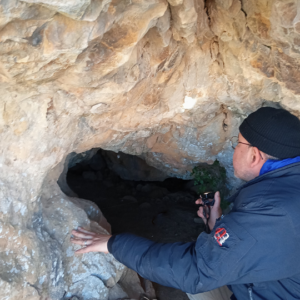
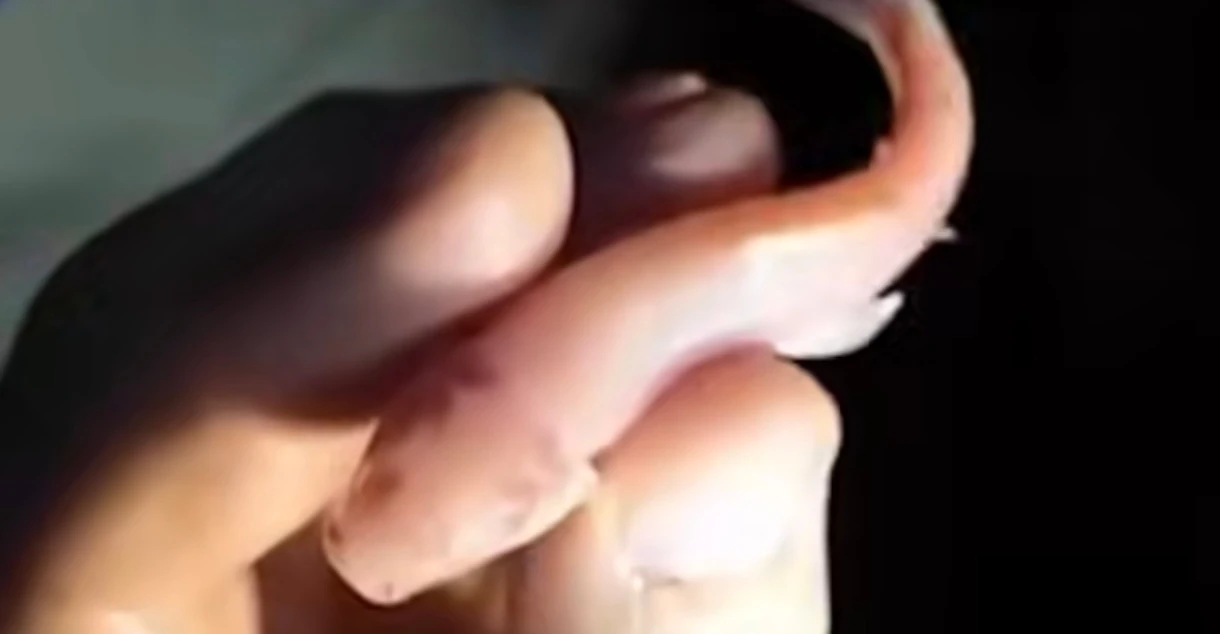
A remarkable phenomenon has recently begun circulating widely on social media: images and videos showing blind cavefish from a subterranean water system in Iraq’s Anbar Governorate being captured with nets, removed from the water and handled directly by people in front of cameras.
The images have understandably attracted attention. A rare blind fish emerging from the darkness of an underground water system is an extraordinary sight.
But behind these images lies a much older scientific story — and a serious conservation issue that deserves to be recalled.
This is not a new discovery
The first point that needs to be clarified is historical.
The blind cavefish of the Haditha area are not newly discovered species.
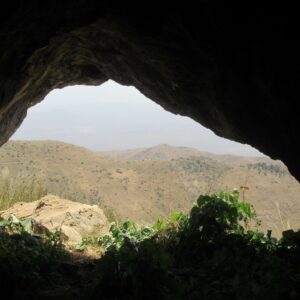
The sinkhole at Sheikh Hadid Shrine, near Haditha on the western bank of the Euphrates, is known to harbour two highly specialized, endemic subterranean fishes: Garra widdowsoni, formerly known as Typhlogarra widdowsoni, and Caecocypris basimi.
Their scientific histories go back many decades.
Garra widdowsoni was described by Ethelwynn Trewavas in 1955, while Caecocypris basimi was described by Banister and Bunni in 1980. Both species are restricted to the subterranean systems around Haditha and are therefore of exceptional biological and scientific interest.
An Iraqi newspaper article published on 3 June 2012 reported the discovery of a rare blind fish by a researcher from the University of Anbar. Interestingly, that article itself used the name Typhllogara-bassimi, reflecting the uncertainty surrounding the identification at the time.
However, the subsequent scientific literature provides a much clearer picture.
What actually happened in 2012?
The year 2012 remains important, but not because these fishes were discovered for the first time.
A scientific team from the Leibniz Institute of Freshwater Ecology and Inland Fisheries in Berlin and the University of Baghdad carried out a field survey in the Haditha area to reassess the status of the two endemic cavefish species — the first comprehensive survey there in approximately 30 years.
The results were alarming.
The team found Garra widdowsoni, but in very small numbers. One documented survey recorded only 25 individuals. The other species, Caecocypris basimi, was not found despite comprehensive searches. Its last known records dated back to 1983, leading conservation specialists to consider the species Critically Endangered and possibly extinct.
The situation of Garra widdowsoni was also considered extremely serious. The species is classified as Critically Endangered on the IUCN Red List.
This is therefore not simply a story about an unusual fish.
It is a story about an exceptionally fragile subterranean ecosystem and species that may already be on the very edge of extinction.
Why are these fish so special?
Cavefish are not simply ordinary fish that happen to live underground.
Over evolutionary time, life in perpetual darkness has produced profound adaptations. The loss or reduction of functional eyes and pigmentation is one of the most obvious characteristics. Their subterranean environment also imposes severe ecological constraints, including limited food availability and dependence on groundwater conditions.
In the case of the Haditha cavefish, the habitat itself is exceptionally restricted. The known locality is essentially an access point into an underground groundwater system rather than a large open river or lake.
Such populations can therefore be particularly vulnerable to changes in groundwater levels, water extraction and hydrological modifications.
Scientific assessments have already identified declining groundwater levels and water abstraction as major threats to these fishes.
The problem with the images circulating today
It is precisely because these animals are so rare and vulnerable that the recent images deserve careful consideration.
Capturing a cavefish with a net, removing it from its aquatic environment and repeatedly handling it simply to display it to a camera is not a substitute for scientific documentation.
Fish have a protective mucus layer covering their bodies. Rough handling can damage this barrier and increase the risk of injury and infection. Removing an aquatic animal from the water also imposes physiological stress. For a species with a very small and potentially declining population, unnecessary capture and repeated handling are difficult to justify from a conservation perspective.
There is an important distinction between capturing an animal as part of a properly designed scientific protocol — for example, when identification, biometric measurements, genetic sampling or population assessment genuinely require it — and capturing an animal merely because it makes a more spectacular video.
The two actions should never be confused.
Why is this story resurfacing now?
This is perhaps the most interesting question.
The subject has suddenly attracted considerable attention on social media in 2026, despite the scientific history of these fishes extending back more than half a century.
We should be careful not to speculate about the intentions of those who are currently sharing the videos. There may be genuine enthusiasm about an extraordinary natural phenomenon, and renewed public interest can sometimes be beneficial for conservation.
But this renewed attention should also be an opportunity to ask an important question:
Why is a scientifically documented phenomenon, known for decades, being presented today in a way that can give the impression of a new discovery?
If new observations have indeed been made, they deserve to be documented properly and compared with the historical scientific record.
A new sighting, a new population assessment or a rediscovery after a period of absence would all be scientifically significant.
But that is very different from presenting an already known species as though it had just been discovered.
What should happen instead?
The renewed interest in the Sheikh Hadid cavefish should be welcomed — but it should be directed toward conservation rather than spectacle.
What is needed is:
- systematic scientific surveying of the subterranean system;
- accurate identification and documentation of the species;
- population monitoring;
- assessment of groundwater levels and water abstraction;
- protection of the cave and its surrounding hydrological system;
- strict control of unnecessary capture and handling;
- and, above all, long-term conservation measures for this unique biological heritage.
The available conservation assessments have already recommended further, in-depth surveys and protection of the site.
A message to those filming these remarkable animals
There is nothing wrong with being fascinated by a blind fish emerging from the darkness of an underground world.
On the contrary, this fascination can become a powerful tool for raising public awareness.
But the most valuable image is not necessarily the one in which someone holds the animal in their hands.
The most valuable image may simply be the fish alive, swimming freely in the darkness that has been its home for thousands or millions of years.
Science does not demonstrate its value by showing how many rare animals we can capture.
It demonstrates its value by showing how much we can learn without destroying what we came to study.
The cavefish of Anbar deserve curiosity, certainly.
They deserve scientific research, absolutely.
But above all, they deserve protection.
And perhaps the most important lesson from the current social-media frenzy is a simple one:
When a species is rare enough to make headlines, it is probably rare enough to leave in peace.
Scientific names:
Garra widdowsoni (Trewavas, 1955), formerly Typhlogarra widdowsoni
Caecocypris basimi Banister & Bunni, 1980
Known locality: Sheikh Hadid Shrine sinkhole, near Haditha, Anbar Governorate, Iraq.
Conservation status: Garra widdowsoni — Critically Endangered; Caecocypris basimi — Critically Endangered, possibly extinct.
Sources
Al-Sheikhly, O.F. & Freyhof, J. (2013), Iraqi endemic cave fish on the very edge: Typhlogarra widdowsoni and Caecocypris basimi. Freshwater Fish Specialist Group Newsletter.
Freyhof, J. — IUCN Red List assessments for Garra widdowsoni and Caecocypris basimi.
Iraq Fifth National Report to the Convention on Biological Diversity, 2014.
Al-Zaman, 3 June 2012, “Discovery of rare fish in the caves of Haditha.”